Which Dental Materials Work Best for CEREC Restorations in Different Situations?
At our practice, we frequently see patients who need strong, beautiful, and long-lasting dental restorations. One of the most advanced tools we use to achieve this is the Chairside Economical Restoration of Esthetic Ceramics system, better known by its acronym, CEREC. This technology allows us to design, mill, and place a permanent crown, inlay, or onlay in a single visit. A key part of the process, however, is selecting the right material for the job. The material we choose directly impacts the restoration's durability, appearance, and function.
Understanding the different materials available helps our patients appreciate the personalized care that goes into their treatment. The choice is not random; it is a clinical decision based on several factors. These include the tooth's location in the mouth, the biting forces it must withstand, and the patient's aesthetic demands. We consider whether the restoration is on a front tooth, where looks are paramount, or a molar, where strength is the top priority. This careful selection ensures that every restoration we create is ideally suited to its specific role.
Understanding the Basics of CEREC Materials
When we talk about CEREC materials, we generally refer to ceramic or composite resin blocks that are milled in a milling machine. Our computer-aided design (CAD) software sends a precise digital model of the tooth to the milling unit, which then carves the restoration out of the selected block. The primary categories of materials we use are glass-ceramics, zirconia, and composite resins. Each has unique properties that make it ideal for specific applications.
For instance, glass-ceramics are known for their exceptional aesthetics. They mimic the translucency and color of natural teeth, making them a superb choice for visible areas of the smile. Zirconia, on the other hand, is renowned for its incredible strength and fracture resistance, making it the workhorse for posterior teeth like molars that handle heavy chewing forces. Composite resins offer a balance of properties and can be used in restorations like inlays. The decision-making process involves a conversation with the patient, during which we explain the pros and cons of each option for their specific case.
Factors We Consider in Material Selection
When evaluating which material to use, we consider a few key criteria.
- Strength and Durability: We must ensure the material can withstand the daily forces of chewing and grinding without cracking or wearing down prematurely. A molar restoration requires much higher strength than one on a lower incisor.
- Aesthetics: How the restoration looks is crucial, especially for teeth in the "smile zone." We need a material matched to the shade and translucency of the surrounding natural teeth.
- Biocompatibility: We use only materials that are safe and well-tolerated by the body's tissues. All modern CEREC materials are highly biocompatible, meaning they will not cause adverse reactions in the gums or surrounding structures.
- Wear Characteristics: The material should wear at a rate similar to natural tooth enamel. If it is too abrasive, it can cause premature wear on the opposing teeth.
High-Strength Materials for Molars and High-Stress Areas
When restoring a posterior tooth, such as a molar or premolar, our primary concern is strength. These teeth bear the brunt of our chewing forces, which can be significant. In these situations, we almost always use zirconia or high-strength lithium disilicate. These materials provide the robustness needed to prevent fractures and ensure the restoration lasts for many years.
Zirconia is one of the toughest materials available in dentistry. It is often referred to as "ceramic steel" due to its exceptional fracture resistance. We usually use solid, or monolithic, zirconia for full crowns on molars because we can make it thinner than other ceramics without compromising strength. This quality helps us preserve more of the natural tooth structure. Another excellent option is lithium disilicate, a glass-ceramic that offers a potent combination of strength and aesthetics. While not as tough as zirconia, it is more than strong enough for most posterior applications and offers superior aesthetics.
Zirconia: The Gold Standard for Strength
Full-contour zirconia is our top choice for patients who clench or grind their teeth (a condition known as bruxism) or for restoring molars that undergo heavy occlusal forces. Its incredible durability results in very low rates of chipping or fracture. Modern zirconia blocks also come in a variety of shades, allowing us to achieve a good aesthetic match, even on back teeth.
Lithium Disilicate (e.max): The Best of Both Worlds
For premolars or first molars where appearance is more important, we often recommend lithium disilicate, commonly known as IPS e.max. This material is sufficiently strong to withstand chewing forces in these areas but offers greater translucency and more lifelike optical properties than zirconia. It allows us to create restorations that are not only durable but also blend seamlessly with the patient's smile. After milling, we can further customize these restorations with stains and glazes to perfect the final look.
Aesthetic Materials for Front Teeth
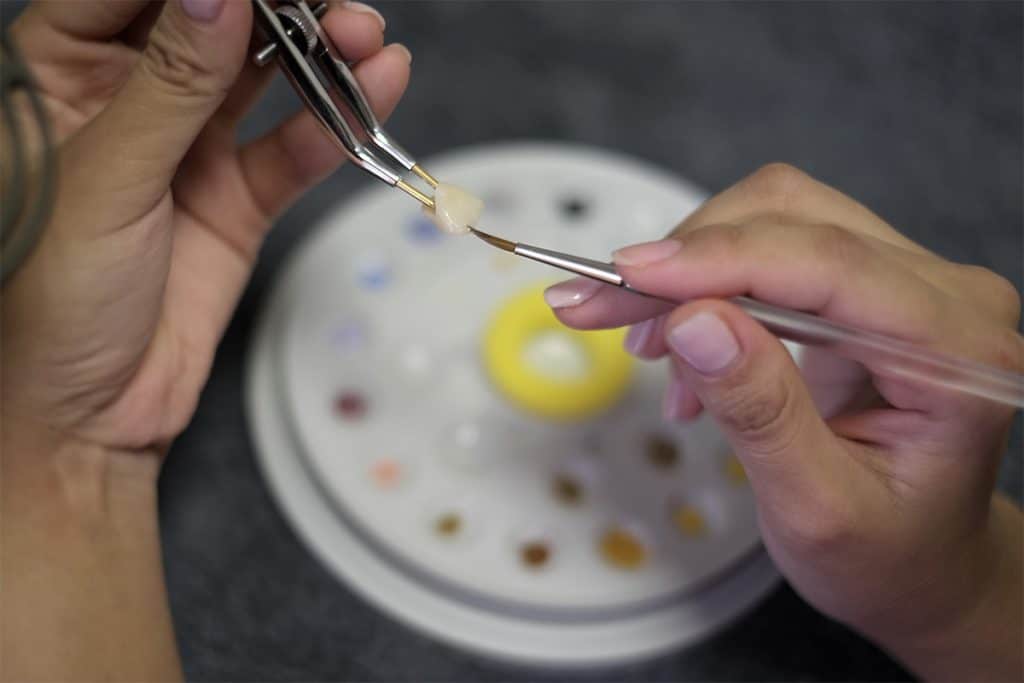
For restorations on anterior teeth—the incisors and canines that are most visible when you smile—aesthetics become our number one priority. We need a material that can perfectly replicate the complex layers, shades, and translucency of a natural tooth. A restoration that looks opaque or "flat" will stand out and detract from the patient's smile. For these highly visible areas, we use advanced glass-ceramics designed for beauty.
Our goal is to create a restoration that is indistinguishable from the adjacent real teeth. This involves meticulous shade matching and selecting a material that behaves similarly to natural enamel under light. Feldspathic porcelain and high-translucency lithium disilicate are our go-to choices for anterior crowns, veneers, and inlays. These materials enable us to achieve an incredibly lifelike result, giving our patients the confidence to smile freely.
Feldspathic Porcelain: The Ultimate in Aesthetics
When cosmetic appearance is the absolute most crucial factor, feldspathic porcelain is often considered the premium choice. This material has optical properties very similar to natural tooth enamel, allowing it to reflect and refract light for a truly lifelike appearance. While it is not as strong as zirconia or lithium disilicate, its strength is sufficient for anterior teeth that do not endure heavy biting forces.
High-Translucency Lithium Disilicate
A more versatile option for front teeth is a high-translucency (HT) version of lithium disilicate (e.max). These blocks allow more light to pass through, mimicking the appearance of natural enamel. HT e.max offers an outstanding balance, providing the excellent aesthetics needed for the smile zone along with greater strength than traditional feldspathic porcelain. This attractive quality makes it a reliable and beautiful choice for crowns and veneers on front teeth.
Choosing the Right Material For You
As we have seen, selecting the ideal material for a CEREC restoration is a detailed process that balances strength, aesthetics, and the specific needs of each tooth. For back teeth that endure heavy chewing forces, we prioritize strength with materials like zirconia. For front teeth, where appearance is everything, we choose highly aesthetic glass-ceramics that blend seamlessly into your smile. Our deep understanding of these materials allows us to deliver predictable, durable, and beautiful results for our patients in a single appointment.
Ultimately, the best way to determine which material is right for you is through a consultation. We can examine your unique clinical situation, discuss your personal goals, and explain the benefits of each option. Our commitment is to use our expertise and advanced technology to create a restoration that not only repairs your tooth but also enhances the health and beauty of your entire smile.
Frequently Asked Questions About CEREC Same-Day Restorations
How long do CEREC restorations last?
The longevity of a CEREC restoration depends on the material used, the location in the mouth, and the patient's oral hygiene habits. With proper care, materials such as zirconia and lithium disilicate can last 10-15 years or longer. Just like natural teeth, it is important to brush, floss, and attend regular dental checkups to ensure the restoration and the underlying tooth remain healthy.
Is the CEREC process uncomfortable?
The CEREC process is typically no more uncomfortable than getting a traditional crown. We will numb the tooth and the surrounding area completely before we begin preparing it. The digital scanning process is fast and comfortable, eliminating the need for messy impression putty. Since the entire procedure occurs in a single visit, you avoid the inconvenience of a temporary crown and a second appointment.
At Brian K. Dennis, DDS, we are proud to offer advanced restorative solutions to our patients throughout Albuquerque, NM. We combine cutting-edge technology with personalized care to ensure you receive the best possible outcome. If you have questions about same-day crowns or other dental services, please reach out to us to schedule a consultation.